

American Greatness
By Victor Davis Hanson
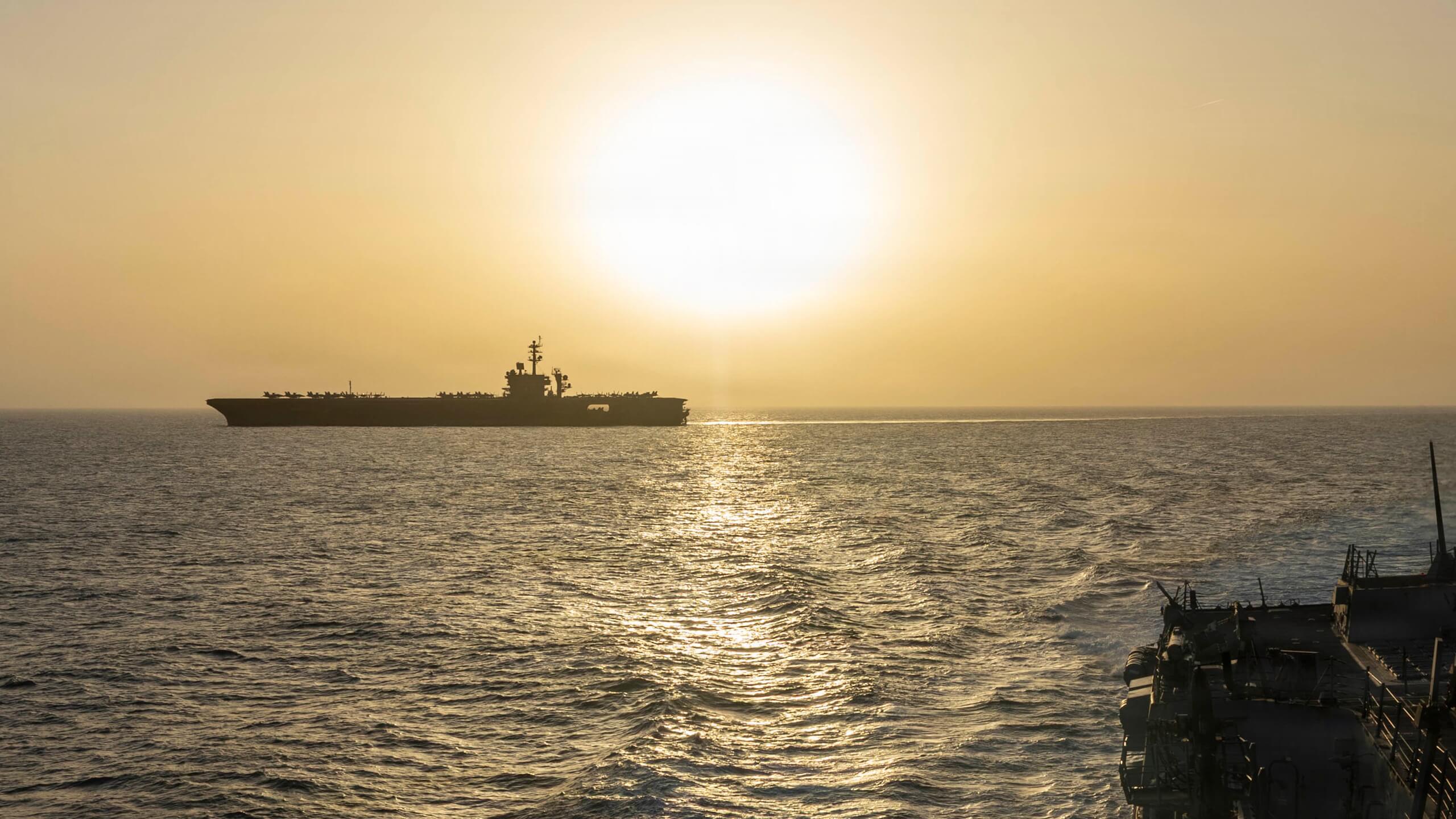
The Iran war didn’t just break Tehran—it shattered old alliances, exposed Europe’s weakness, checked China and Russia, and accelerated an American-led geopolitical realignment.
No one ever quite knows the nature of the aftermath of any war in the Middle East.
The current effort to disarm and neuter the Iranian theocracy is no exception.
But contrary to European and American left-wing consensus, the ripples of the Iran war are already remaking the postwar world as we knew it—and in ways that are all bad.
For more than half a century, OPEC has terrorized the industrial world with threats of oil shortages and sky-high prices, with members often agreeing to cut back to 70–80 percent of their capacities.
But recently, the hard-pressed United Arab Emirates announced—at a time of high oil prices—that it was leaving the cartel and freelancing. The UAE will likely increase its production by 1–2 million barrels per day. Once such a key member departs, it is probable that other oil-exporting nations will defect to take advantage of the current spike in oil prices to avoid missing out on profits as others get richer.
OPEC is no longer the powerhouse monopoly of the 1970s. It now accounts for barely half of the world’s exported oil. Meanwhile, the US, the largest producer of oil and gas in history, is pushing hard to increase daily production to meet increased demand for American oil. A rebooted Venezuela has already reached a seven-year high in its renewed output and promises even faster escalation in oil exports.
Russia’s still-sanctioned oil has suddenly started to appear on the world market, as the Kremlin has upped exports by a quarter-million barrels per day.
Add it all up, and Iran’s 1.5–2 million barrels may not be all that missed, as the world price may fall by summer—regardless of Iran’s status.
The combination of a neutered Iran and its foolish targeting of the Gulf nations is also redefining the Middle East.
It is odd for Arab nations to urge the US to continue its bombing of another Middle Eastern nation. But the Arab nations of the Gulf Cooperation Council (Bahrain, Kuwait, Oman, Qatar, Saudi Arabia, and the United Arab Emirates) are frantically asking America to end the nearby Iranian theocracy for good.
The Gulf states were hit by six times as many Iranian rockets and drones as Israel. And by itself, the Jewish state poses no regional threat to the Persian Gulf exporters.
The result is a more realistic, less ideological Gulf council that is beginning to accept the fact that in the Middle East, Israel alone has the combat aircraft, expertise, and experience to strike Iran and deter it from attacking moderate Arab governments. This raises the specter of a new de facto alliance of mutual advantage between Israel and much of the Arab world, one that would isolate Iran, along with Hezbollah, Hamas, and the Houthis. If the previous catalyst for the Abraham Accords détente was American pressure, it may soon become Arab self-interest.
As for Iran’s three terrorist cabals, cash is in short supply. Will it be feasible for a postwar Iran, even if the regime survives in some form, to spend billions of dollars subsidizing terrorists that increasingly have little support in the Arab world?
Will a destitute Iran be able to replace its half-century-long, half-trillion-dollar investment in its military-industrial complex, now in ruins?
OPEC seems not to be the only loser in the brief two-month war. Having previously lost its Syrian proxy, Russia is now effectively cut off from the Middle East with the loss of its client Iran, a separation that could become permanent should the theocracy fall.
Moscow is still trapped in a four-year quagmire in Ukraine, with dead and wounded approaching two million and an economy on the brink of depression.
Putin’s worries are myriad. His nation is the largest in the world in terms of landmass, but the population has shrunk from the USSR’s high of 290 million to scarcely 145 million people—an aging and declining demographic.
Large countries with abundant natural resources and relatively small, diminishing populations naturally draw the attention of a nearby rapacious China, making Putin more inclined to seek détente with the West.
China itself, under American pressure in Panama and having lost much of its influence with oil-rich Venezuela, is scrambling in vain to find new oil producers desperate to unload their sanctioned oil at a discount to the Chinese. Beijing is as dependent on foreign sources of energy as the US is self-sufficient.
Beijing continues to eye Taiwan as always, but it is now disturbed by the display of high-tech American naval and aerial prowess, just as it has been disappointed by the inability of the Russian army to overrun a much smaller and less well-armed Ukraine.
As a result, China may be absorbing these lessons and rethinking the viability of sending an amphibious fleet across some 110 miles of open sea and then landing hundreds of thousands of People’s Liberation Army soldiers on the beaches of Taiwan—amid skies full of drones and missiles and a sea of maritime drone ships and submarines.
Europe was also a big loser from the war. The temporary closing of the Strait of Hormuz reminded the oil-dependent European Union that its radical green agenda was unsustainable. The continent retains a desperate need to find safe and reliable exporters of affordable fossil fuels.
Many NATO members—Spain, France, Italy, and the United Kingdom in particular—will regret their loud opposition to allowing the US to stealthily use their airspace and joint NATO bases.
True, the Europeans despise Trump. But they still may need the US military to protect them from Russia, any potential anti-Western nuclear power with ballistic missiles, and regional destabilizers like Milosevic-era Serbia.
Of course, most European hearts wanted to restrain or even weaken the now Trump-led Americans. But their heads told them that the American-guided demise of the Iranian theocracy meant fewer existential threats to Europe from the Middle East, fewer violent Arab clients and proxies in the region, and fewer subsidized terrorists in their own backyards.
So the European nations could have kept quiet about allowing the US to use their airspace and basing under NATO privileges, without endangering their opportunistic nonparticipation in the war. They could have shown “concern” without stooping to loud “This is not our war” cheap attacks on the US—and thereby kept the NATO partnership strong. Germany, in this regard, was particularly tone-deaf in its arrogance.
In the end, apparently, many Western European NATO members were more scared of Iranian reprisals, their radical political parties, and internal Islamic terrorists than of losing their cherished special relationship with America.
Moreover, the Arab world is relearning that Britain and France talk a great game but, when words must be followed by action, are often nowhere to be seen.
Where have been the long-promised Anglo-French-led European armadas of blockade breakers in the Strait of Hormuz? Where are the Europeans to protect their Gulf oil suppliers from Iranian attacks? Where is the French help for its former colony, Lebanon, in its hour of need, as it stands up to Hezbollah?
Despite Trump’s threats, NATO will survive, at least in name.
But in reality, American attention will shift eastward to those European members who believe in strong defense, deterrence, Western exceptionalism, and the unquestioned value of American support. It is likely that any future unilateral European expedition—like the 1982 British armada sent to the Falklands or the long French intervention in Chad, or even the unofficial and ad hoc French- and British-inspired NATO “coalitions of the willing” sent to bomb Serbia in 1999 and Libya in 2011—will no longer find American support.
Add it all up, and we see that Iran, which all nations in the region once feared, is now isolated, despised, and weak—likely never again to become the terror of the Middle East.
Israel may well become normalized in the region, largely because of its indomitable military and its high-tech, dynamic economy that poses no threat to the moderate Arab world but offers them lots of advantages.
China’s Belt and Road strategy has hit a wall in the Middle East and the Western Hemisphere. It can no longer slake its thirst for the cheap, sanctioned oil of tyrants.
Russia is more vulnerable than at any time in its long history and more focused on defending its borders than deploying abroad.
For years, European nations have been warned that disarmament, unsustainable cradle-to-grave socialist entitlements, open borders, declining fertility, radical green policies, rising populations of often-illegal aliens from the radical Middle East, and cheap anti-Americanism were a prescription for civilizational decline. The Iran war confirmed all those warnings and revealed Europe as even more listless and impotent than its friends had feared.
For all the global abuse and cheap left-wing attacks, America is emerging from the war perhaps stronger than at any point since the postwar era.

