

American Greatness
By Victor Davis Hanson
Military victories are decided on the battlefield—but in modern America, they are too often lost in the politics that follow.
The rare quick and total victory over an enemy at little cost often ensures unquestioned political support in modern consensual societies.
In most cases, however, especially in the Western world, ongoing military success or failure is adjudicated through the lens of politics—in a way sometimes at odds with the reality of the battlefield.
Politicians answer to the people. The best do not drift with the prevailing winds. On the other hand, all must face elections, secure legislative support, and ultimately explain to voters the human and financial costs of a war and whether it was existential or optional—and, in the latter case, whether it was worth the costs.
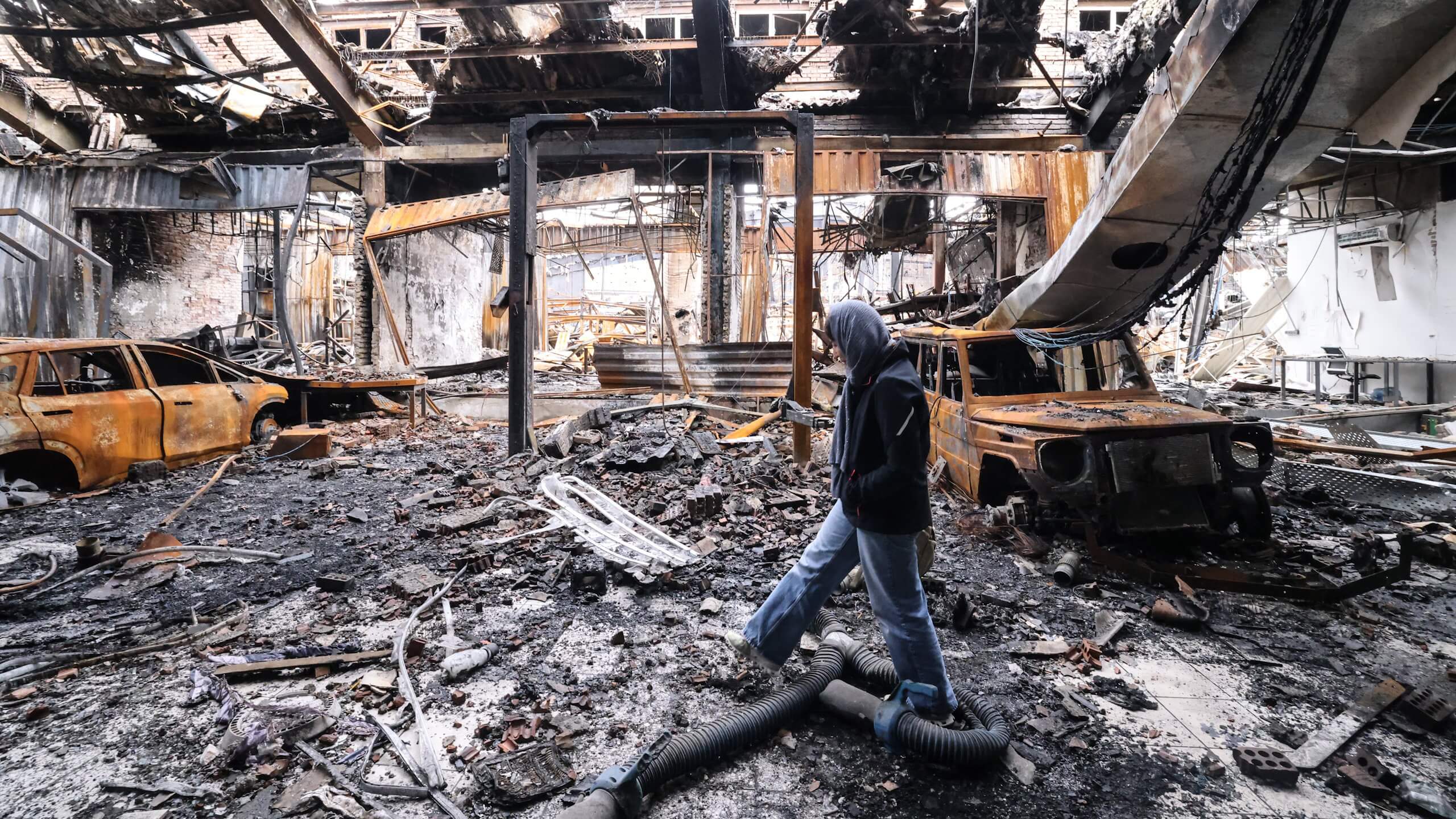
By any purely military standard, in the current month-long war, Iran has been devastated by the combined air forces of the U.S. and Israel. Both nations achieved air supremacy early on. Iran has no air force or air defenses left. Its major warships are sunk. It has lost the ability to supply its terroristic appendages by air or sea. It has difficulty importing weapons from abroad. The Iranian military and the theocratic chain of command have been devastated. Iran’s population is restive, held in check only by the sheer level of murder carried out by the Iranian Revolutionary Guard on a regular basis.
So far, the U.S. military has suffered 13 fatalities and perhaps 300 wounded. Every life is dear. But given the horrific costs of prior fighting in the Middle East, the military has, in amazing fashion, curbed American losses.
If the war lasts the predicted six to eight weeks, it will likely cost between $40 and $50 billion in direct expenditures, a substantial but not excessive amount as conflicts go.
There will follow a number of geostrategic ripples from even a surviving but disarmed and impoverished theocracy: radical cuts in arms and money to its terrorist proxies, Hezbollah, Hamas, and the Houthis; China and Russia will have lost a client and its baleful influence in the Middle East. The diminution of Iran will instead likely empower the pro-Western Gulf monarchies and democratic Israel. For years to come, the threat of nuclear ballistic missiles hitting Europe or eventually the U.S. will be diminished.
In historical terms, the air campaign has so far been less costly than the 42-day first Gulf War of 1991, in which the U.S. had far more coalition partners and a less formidable enemy. In that war, 33 U.S. airmen were lost, along with some 54 aircraft, including helicopters. NATO’s 1,000-plane bombing of Yugoslavia in 1999 lasted 78 days, with two downed fighter aircraft and no losses of U.S. airmen. In that operation, the U.S. had far more allied support and faced a far weaker target in Serbia.
So, by comparable historical standards, the U.S. has inflicted catastrophic damage on Iran while sustaining what might be termed “unexpectedly light” casualties, given the vast scope and difficulty of the theater of operations—while achieving the original aims of the war is within sight.
A Disaster—Really?
Why, then—aside from the reality that war in itself is horrific—is the 30-day one-sided conflict being termed a disaster, and the anti-war opposition becoming ever more virulent and emboldened in its claims of an American catastrophic defeat and an Iranian “victory”?
The following motives—not any disinterested examination of the actual military realities of the last month—are what explain the current declarations that the war is all but lost:
First, the antiwar faction calls the war a failure because the brutal theocracy is (for now) still in power—ironically, the Left protests about the severity of the war, while damning it for not being as severe as necessary.
True, removing the regime is the only certain way to end the larger, half-century-long conflict for good. A new government alone would ensure Iran never again attacks Americans and uses its oil and geography to fuel terror and endanger the world economy.
But neutering, not ending, the mullahs in Iran was always the primary objective. While at times Trump and others around him have talked of liberating the Iranian people and regime change, and while that would be naturally the optimum result of the war, it was never explicitly listed as a purpose of the preemptive bombing.
The administration from the beginning outlined its several war objectives: (1) the destruction of Iran’s ability to produce a nuclear weapon; (2) demolishing its missile and drone forces and ability to manufacture both; (3) cutting off arms and aid to Hezbollah, Hamas, and the Houthis; and (4) ending Iran’s 47-year-long killing of Americans and disruption of the strategically important Middle East.
That aim will be achieved when the war ensures that Iran launches no more missiles and drones, the Strait of Hormuz is free of Iranian interference, and its proxies cannot receive measurable Iranian help. Those objectives are certainly doable in the next three or four weeks, albeit with the risky possibility of using ground troops to take Kharg Island or to create a sanitary corridor on the Iranian side of the strait.
Upon cessation of hostilities, the regime’s entire trillion-dollar military infrastructure will be ruined, and its economy inert. An angry population will not want billions spent to restore missiles and monies for Arab proxies or even for a new nuclear program.
The Midterms
Trump, in a little more than seven months, is facing a midterm election, traditionally marked by the administration in power losing congressional seats if not majorities. His efforts to reverse historical trends, maintain control of the House and Senate, and complete his counterrevolution in large part hinge on a booming economy, not on fighting a war in the Middle East. And the two may appear to voters as antithetical.
Prior to the war, many economists had believed that Trump’s successful prewar efforts to reduce gas prices—coupled with new deregulation, interest rates likely to fall soon, multitrillion-dollar new foreign investment, and fairer and reciprocal trading—might, by summer, boost the economy and, by November, convince Americans they would be far better off under Trump’s agenda than with the left-wing alternative.
The now hard-left Democratic Party, of course, grasps this and so feels that massive resistance to the war, not a preferred agenda, might lose Trump the Congress. So attacking the war and declaring it a complete disaster will continue where the media-sensationalized Tesla vandalism, anti-DOGE and anti-ICE protests, and No Kings rallies left off—and hopefully succeed in further driving down the pre-midterm approvals of Trump and his congressional allies.
Remember, the Left has no consistent principles—other than a lust for power by any means necessary. The Obama/NATO 2011 seven-month bombing of Libya achieved nothing but chaos and death—and led to the Benghazi catastrophe. It entailed 26,000 bombing sorties.
Yet the constitutional lawyer Obama never asked Congress for any authorization for his months-long bombing war, and he didn’t do so either for his drone/targeted assassination war over the Pakistani–Afghan border. And the “watchdog” media kept mute.
The Biden Afghan debacle cost 13 lives, brought thousands of unaudited Afghan refugees into the U.S. (some of them criminals), abandoned loyal Afghans and U.S. contractors, and left billions of dollars of new sophisticated military equipment and arms in the hands of the terrorist Taliban. And again, the “democracy dies in darkness” media was largely silent or offered excuses for the worst military disaster since the flight from Vietnam.
Who Speaks for MAGA?
While the MAGA base supports Trump, a vocal and influential minority of podcasters, internet influencers, and pundits have become virulent critics of the war. They charge that Trump ran on ending “forever wars”—now we supposedly are in one. But, as president, Trump quickly learned that giving the impression he was an isolationist who ruled out force would only invite enemies’ aggression.
Thus, in his first term, Trump successfully took out terrorists and paramilitaries like Qasem Soleimani, Abu Bakr al-Baghdadi, and the Wagner Group, and bombed ISIS—but mostly with air power, for short durations, and without many casualties.
The second time around, Trump was true to form in 2025 by severely damaging the Iranian nuclear facilities in a “war” consisting of only 25 hours of bombing runs over Iran. The 2026 day-long operation to capture dictator Nicolás Maduro in Venezuela was pulled off without American fatalities, leading neither to widespread damage to Venezuela nor to costly nation-building.
Instead, the Maduro arrest offered a real chance that Venezuela’s new strongwoman might at least cease its communist aggression in the region, stop shipping drugs and illegal aliens to the American homeland, reenter the free world’s oil market, and end its status as a Russian and Chinese proxy and an American enemy.
So far, Trump has had no forever wars.
And as a Jacksonian, Trump may achieve in Iran a great deal of good for the world without the costs of past “forever wars.” In any case, a six- to eight-week conflict of the current sort certainly does not fall into the category of an Iraq or Afghanistan endless conflict—unless it involves a substantial loss of American soldiers, a larger and longer ground war, and a theater-wide or superpower-level massive escalation.
Messaging
Finally, the administration’s media portrayal of the war has so far been workmanlike but not inspired, which has hurt public support for its Iranian agenda.
Here are the problems with the media strategy:
Administration and military officials mostly cite the numbers and percentages of missiles and drones taken out, sorties finished, sites destroyed, and leaders eliminated to suggest to the public that the war is almost won. True, such undeniably lopsided figures suggest Iran’s assets are rapidly diminishing.
But while all these numbers are accurate, they do not tell the entire story. Note that the original existing inventories of Iranian weapons were largely unknown. So exactly how many drones, missiles, nuclear sites, tunnels, Republican Guard leaders, and so on did Iran possess before the bombing started?
A better strategy would be to simply qualify the good news with something like, “Our damage to Iran has been massive on all fronts, but Iran is a rich, powerful, and large country with years to have hidden missile silos and launchers. And so our ambitious goals to completely destroy its ability to wage war will mean that Iran may, for a while longer, inflict sporadic but real damage, as we continue to find and finish off what we think are its vestigial forces.”
In contrast, the public does not wish to hear that “93 percent of missiles are destroyed” only to then listen to sensational reports of ballistic missiles falling on U.S. bases, drones ramming into airports in the Gulf, or massive cluster bomb attacks on Israel. The same is true of accurate reports that the major warships of the Iranian navy have been sunk. But they additionally had hundreds of small PT-like boats that can launch drones and rockets and perhaps drop mines. A better narrative would explain that. “We had destroyed Iran’s conventional navy, and now we can turn to its once vast fleet of patrol boats that pose a menace to shipping in the Gulf.”
So it would be preferable to say that a cornered and trapped Iran has long sequestered caches of missiles, drones, and boats, and our challenging mission is to find and soon destroy all of them.
The administration needs to be candid about its prewar aims and how they relate to the buzzphrase, “regime change.” It could reiterate that at the outset it sought to denuclearize Iran, end its drone and missile capabilities, disrupt its theocratic and military command and control, strangle aid to its terrorist proxies, diminish Iran as a regional and anti-American threat, and hope that such aid to Iranian dissidents (“help is on the way”) might soon lead to their successful removal of the regime.
Then it can honestly say that regime change was not its original goal, but it always hoped that the radical diminishment of Iranian power and prestige might empower its sizable and growing domestic resistance, which the U.S. sought to help by diminishing the theocracy.
The administration needs to counter left-wing and far-right hysteria about the supposedly undue influence of Israel.
Israel and the U.S. have many shared agendas—not all, but many—and weakening Iran in this operation is certainly at the top of their shared list. We realize that because we are powerful and at a distance from Iran, while Israel is nearer and more vulnerable, it will, from time to time, have different views of and solutions to Iran’s existential threats and must operate for its own national self-interest, as we do for our own.
But when our national interests dovetail—no terrorist entity has killed more Americans in the last half-century than has Iran—then we are proud and lucky to partner with Israel, a democracy and free society with a formidable record of military competency and a larger air force than any of our NATO partners—including Turkey, France, the UK, and Germany.
Despite the frenzy, the military side of the operation has gone particularly well, often conducted in brilliant fashion. But the hysterical politics of the war have been dangerous to the degree that it now threatens the very mission itself.
Remember: all that can be clearly won through battle can be lost through politics—as post-Vietnam America should know all too well.
 ConspiracyAnalyst.org